
Data centres without borders.
Sterling Orbital is engineering an end-to-end orbital computing platform — from space-hardened silicon to quantum-secure optical mesh networks — designed to operate autonomously across orbital regimes.
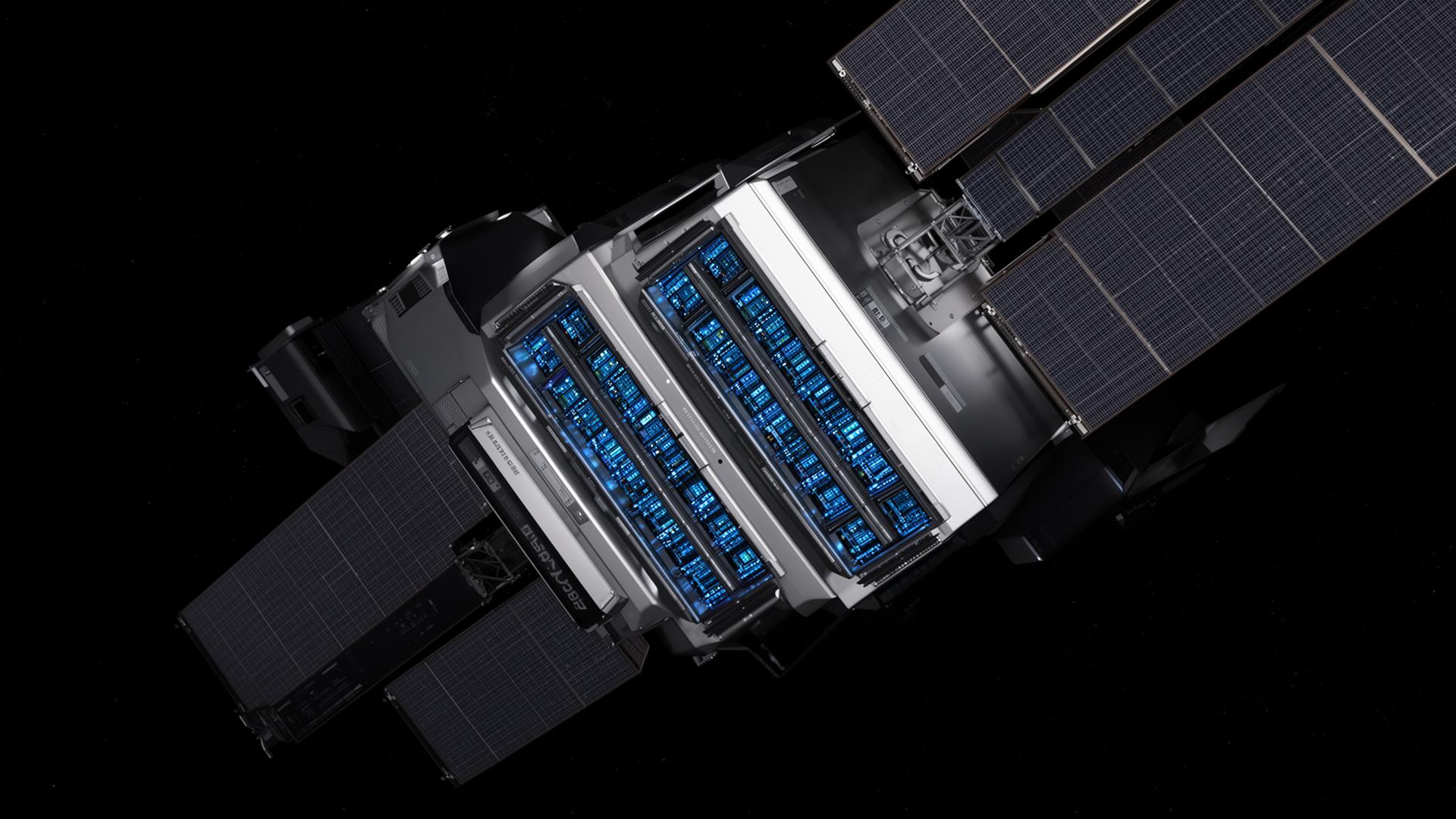
Six engineering pillars of the orbital stack.
Each pillar is being researched and prototyped to mission-grade discipline, with security, autonomy, and longevity as first-class requirements.
Space-Hardened Compute
Radiation-tolerant compute architectures designed for the thermal, vacuum, and radiation environments of orbital operations.
AI Processing Modules
High-density accelerator stacks engineered for orbital inference, training co-processing, and edge model serving.
Optical Communications
Free-space optical inter-satellite links forming high-bandwidth mesh fabrics between orbital nodes.
Quantum-Secure Networks
Post-quantum cryptography and quantum-distributed key research for sovereign-grade orbital networking.
Autonomous Operations
Self-managing orchestration, failover, and orbital fleet operations with minimal ground-station dependency.
Edge Computing From Orbit
Low-latency compute delivered globally — observation, telemetry, and inference processed on-orbit.
A generational roadmap for orbital compute.
From early Earth-connected nodes to a fully cislunar compute fabric — each generation expands capability, autonomy, and reach.
Generation I
2028 – 2032
Earth-connected orbital processing nodes
Distributed compute modules integrated with terrestrial cloud and ground-station networks.
Generation II
2030 – 2034
Autonomous AI compute satellites
Self-managing inference and training clusters operating across LEO.
Generation III
2032 – 2035
Orbital server constellations
Mesh-networked server fabric spanning LEO, MEO, and GEO regimes.
Generation IV
2035+
Cislunar infrastructure
Compute and storage tied into the lunar gateway and surface assets.
Engineer the orbital stack with us.
For technical partners, suppliers, and research labs.