
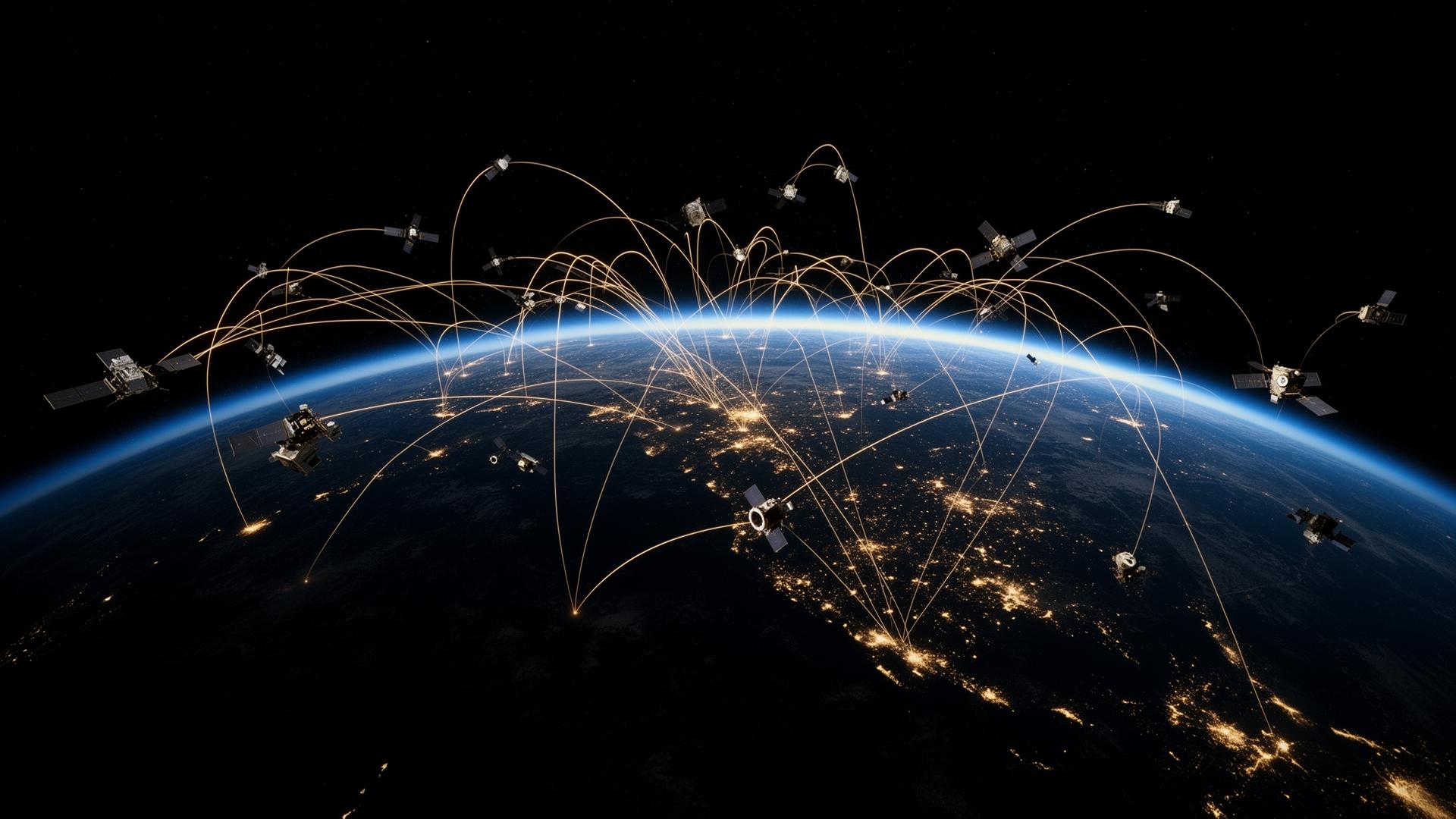
Building the Digital Infrastructure Beyond Earth
Sterling Orbital is developing next-generation orbital computing platforms, space-based data centres, and cislunar network infrastructure designed for the future of artificial intelligence, communications, and humanity's expansion beyond Earth.
Generation I
LEO Compute Infrastructure
In Research
Orbital AI Processing
Roadmap 2032
Cislunar Connectivity
7,534
Total Launches · All Nations · Live
The world's orbital tempo, in real time.
A live picture of humanity's launch cadence across every spacefaring nation — total launches recorded since the start of the space age, the next missions on the manifest, and the local time at the world's primary spaceports.
Data refreshed Tue, 15 Sep 2026 17:13:27 GMT · auto-updating
Earth-based infrastructure is reaching its limits.
The exponential growth of artificial intelligence is creating unprecedented demand for energy, cooling, secure compute capacity, data sovereignty, and global connectivity. Orbital data centres open a new frontier.
Unlimited solar energy
Continuous power generation in orbital environments.
Passive space cooling
Radiate heat directly into the vacuum of space.
Global coverage
Serve any region of the planet from above.
Reduced terrestrial constraints
Free from land, water, and grid limitations.
Resilient infrastructure
Distributed by design, survivable by architecture.
Lunar economy integration
Forward-compatible with cislunar expansion.
Data centres without borders.
Sterling Orbital's long-term roadmap deploys generational platforms — from early Earth-connected nodes to a fully cislunar compute fabric.
Gen I
Earth-connected orbital processing nodes
Distributed compute modules integrated with terrestrial networks.
Gen II
Autonomous AI compute satellites
Self-managing inference and training clusters operating in LEO.
Gen III
Orbital server constellations
Mesh-networked server fabric spanning multiple orbital regimes.
Gen IV
Moon-connected cislunar infrastructure
Compute and storage tied into lunar gateway and surface assets.
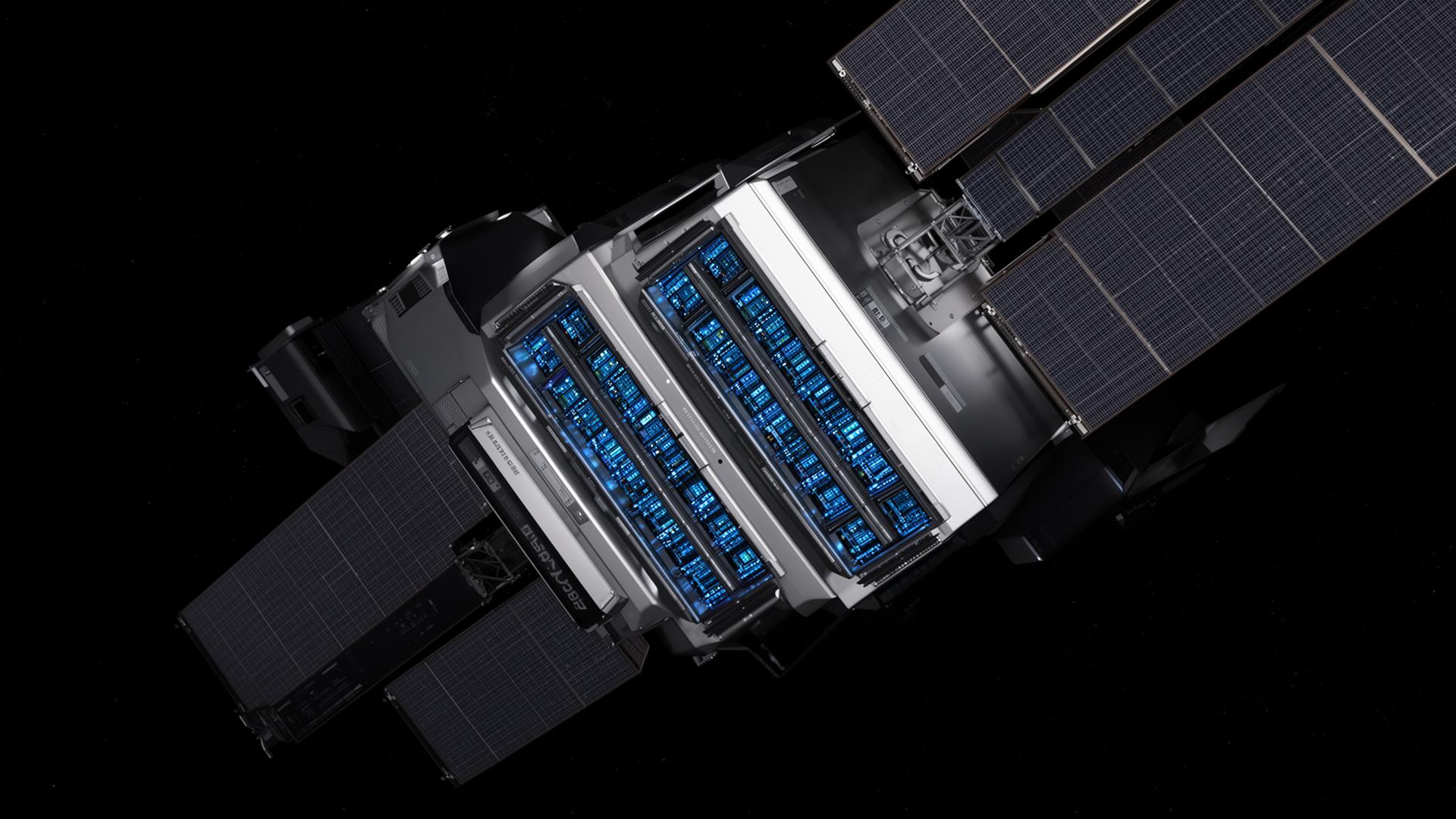
Space-Hardened Compute
AI Processing Modules
Optical Communications
Quantum-Secure Networks
Autonomous Operations
Edge Computing From Orbit
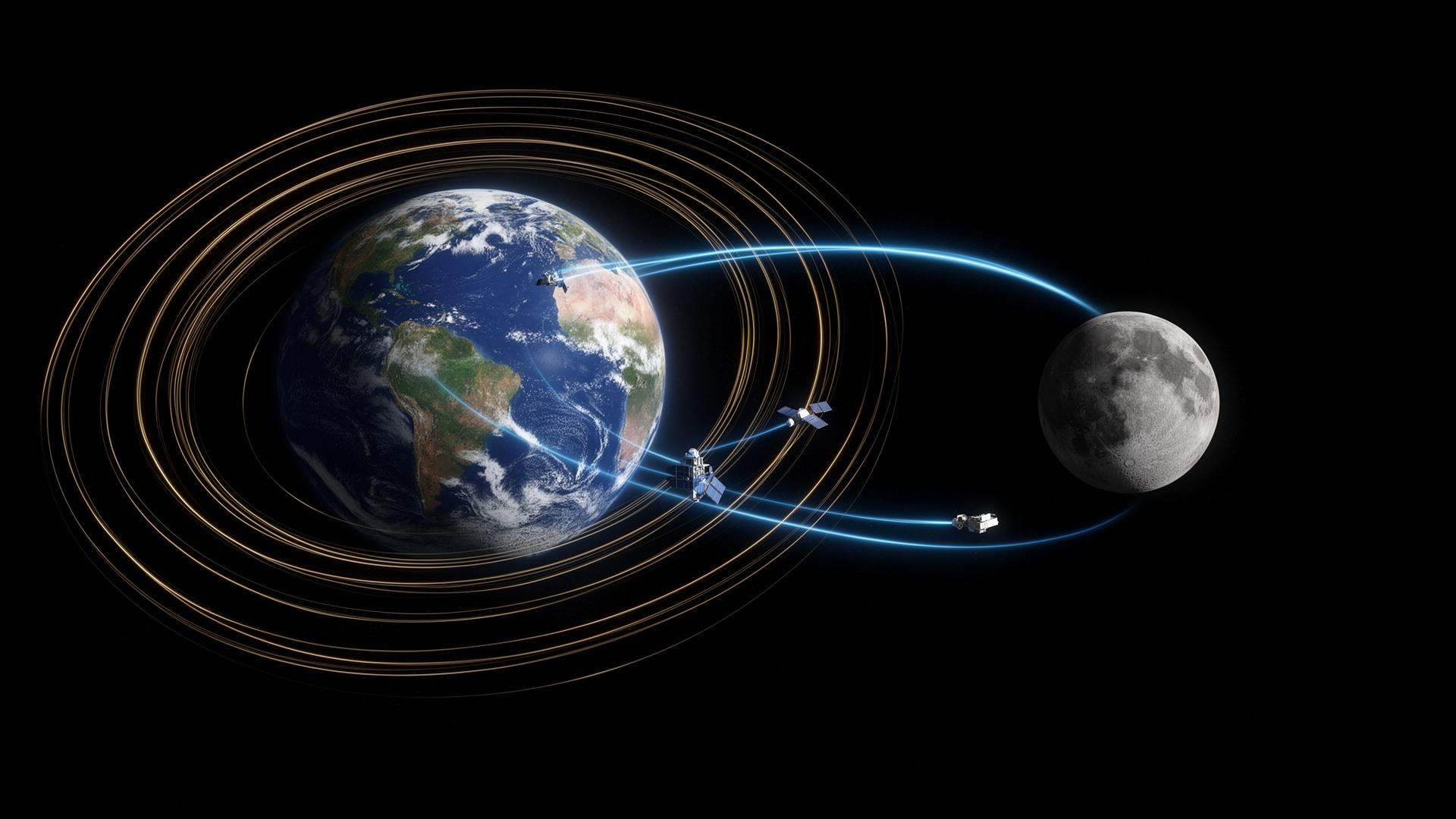
The internet between worlds.
Future human activity will extend beyond Earth orbit. Sterling Orbital is researching the network infrastructure required to connect Earth, LEO, MEO, GEO, the lunar gateway, and the Moon.
Network Stack
Earth → Moon
Earth
Ground stations and terrestrial backbone
LEO
Low Earth Orbit · 200–2,000 km
MEO
Medium Earth Orbit · 2,000–35,786 km
GEO
Geostationary Orbit · 35,786 km
Lunar Gateway
Cislunar relay infrastructure
Moon
Lunar surface networks
Artificial intelligence needs a new frontier.
The next generation of AI requires massive compute, energy-efficient infrastructure, low-latency global deployment, and secure sovereign environments. Sterling Orbital's vision is orbital AI infrastructure built for this scale.
Partnership
Partner in the Next Infrastructure Frontier.
Sterling Orbital is seeking aerospace primes, cloud providers, AI laboratories, satellite manufacturers, and sovereign institutions to co-develop the foundational layer of off-world digital infrastructure.
A decade-long mission profile.
2026 – 2028
Research & Strategic Partnerships
Architectural research, simulation, and foundational partnerships across aerospace, AI, and defence.
2028 – 2032
Prototype Orbital Compute Modules
First flight-ready space-hardened compute modules and ground-orbit network demonstrators.
2032 – 2035
First Generation Orbital Data Platforms
Operational orbital data platforms serving early enterprise, AI, and sovereign workloads.
2035+
Cislunar Infrastructure Expansion
Cislunar relay nodes, lunar gateway integration, and forward presence toward the Moon.
A long-term research programme.
Sterling Orbital is developing a long-term research roadmap focused on orbital compute feasibility, space-hardened infrastructure, autonomous network operations, energy-efficient orbital processing, and future lunar data systems.
Orbital compute feasibility
Modelling thermal, radiation, and power envelopes for sustained on-orbit processing.
Space-hardened infrastructure
Researching fault-tolerant architectures, shielding strategies, and long-duration reliability.
Autonomous network operations
Designing self-managing orbital fabrics with optical mesh routing and on-orbit orchestration.
Energy-efficient orbital processing
Studying solar-direct compute scheduling and passive radiative cooling at scale.
Future lunar data systems
Planning cislunar relays, lunar surface storage, and Earth–Moon data architectures.
Sovereign & resilient compute
Researching jurisdiction-agnostic, survivable platforms for institutional workloads.
Built for the institutions defining the next era.
Government & Defence
Secure sovereign orbital infrastructure
Artificial Intelligence
Next-generation compute capacity
Telecommunications
Global connectivity networks
Space Industry
Infrastructure for the new space economy
Research
Scientific computing beyond Earth
Cloud Infrastructure
Off-world extension of terrestrial cloud
Building the space infrastructure ecosystem.
Sterling Orbital seeks long-term collaboration across the aerospace, AI, and government ecosystem to architect off-world compute together.
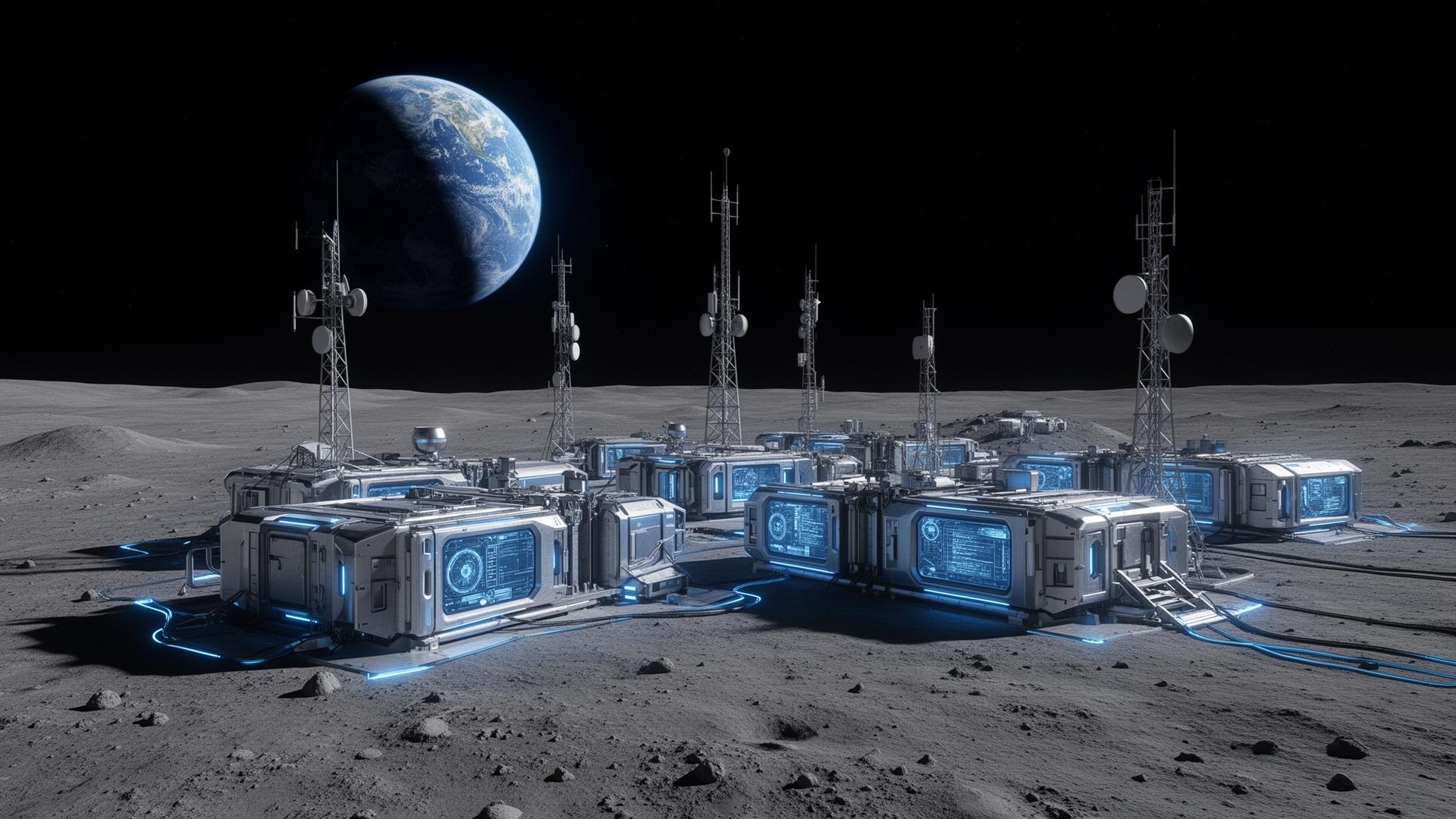
Programme Status
Early-stage development and partnership formation.
Sterling Orbital is currently in early-stage development and partnership formation. The systems described across this site are under active research, design, or planning. Sterling Orbital does not currently operate satellites, orbital servers, or lunar infrastructure. Our roadmap is presented openly to invite mission-aligned investors, aerospace partners, and government innovation offices into the conversation.
Collaboration
Build With Sterling Orbital.
Whether you represent a government agency, aerospace partner, cloud infrastructure company, or research institution — we welcome engagement on technology, research, and long-horizon planning.